
Tea Chat RSS 1 RSS 2 Atom

What shook Japan on March 11th was fatal and catastrophic, but no one knew then that its shocks, in the form of economic drains, wouldn’t cease a bit several months later.  In the latest wave of banned items issued by the government, dried tea hits the list in even wider margins.

What does this mean for the tea buyer? Shortages and higher prices and probably not just for tea drinkers in Japan.

The primary problem remains to be the radiation leaks from the greatly affected Fukushima Dai-Ichi power station. However, as of early June, the ban now extends to four surrounding provinces where tainted produce has been found over legal limits: Ibaraki, Chiba, Kanagawa and Tochigi. products effected by Japanese radiation

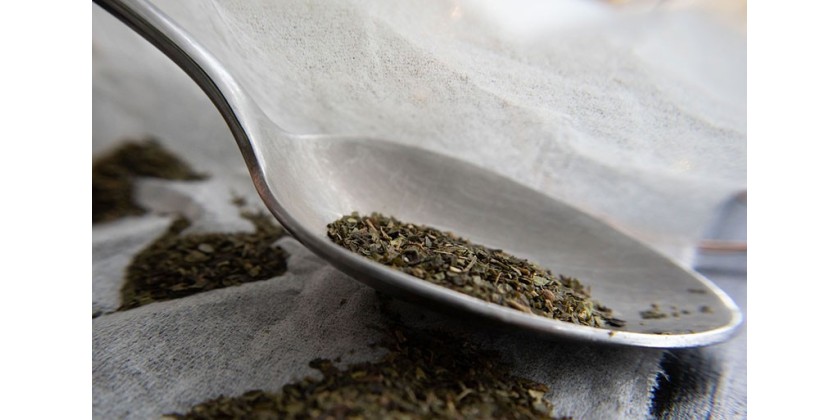
What you should know—the ban includes tea leaves that contain over 500 becquerels of radioactive cesium per kilogram. Japan’s largest green tea growing region, Shizuoka, which produced 40 % of the nation’s total output last year, has yet to detect any levels of concern. Of the regions that did, dried leaves are the ones to watch as they can hold up to 5 times the amount of toxins than fresh leaves can.

Even with Japan’s largest province still in the clear to export, a cost increase is certainly predicted. On the island, it’s expected that people will soon switch from green tea, the primary tea produced in those regions, to oolong tea or barley-based drinks to save money.

What’s the risk for the world and tea drinkers from all over? The tea business in Japan yielded $1.3 billion in 2009. Tea no longer produced on this scale is going to disrupt tea availability and possibly shift the market. For how long and how much are the questions to ask.

Pictured: A bag of dark chocolate and green tea Kit-Kats produced in Japan (a gift from my friend currently living there). The shortage of green tea also strikes products that use green tea as a flavor enhancer in Japan, such as these Kit-Kats, ice cream, cookies and more.

Facebook!

Japanese tea setThe state of the global economy could be compared to a roller-coaster. Because:

  • there are a lot of unexpected twists and turns that you can never really prepare for,
  • sometimes there is even the mind-boggling loop-de-loop that leaves you suspended,
  • and then there’s always that shocking drop where all you can do is hold on for dear life.

More recently, one of the frequent passengers of this economic rollercoaster has been the tea industry and it’s consumers.

Along with global conflicts, such as the current tensions and terrors in Libya and the recent natural disasters in Asia, imports and exports are also along for the challenging journey.

The tea world has been affected by these factors and recently the tea productions in Asia have slowed as well as in Africa, but tea experts aren’t too worried about the decline. The first two months of 2011 has seen an almost 16 percent decrease compared to record highs in January and February 2010.

Tea experts don’t see these slumps as long lasting. According to the Asian Tribune, “world tea prices are expected to remain moderately high in 2011 due to the rise in world tea consumption.”

But when there is a bad batch of tea, there is nothing that can be done to save it from becoming another discounted product. It is the reality in the business/consumer world that when a product is not at it’s peak performance then it is not sold at full price.

African tea workerReuters Africa recently reported that a less than stellar batch of tea in India resulted in low tea prices at the week’s tea auction. Many aren’t too worried about the low quality since the season has yet to reach its peak and not all batches will be seen as “the best.”

These production decreases and price increases aren’t bringing down the tea consumers and experts, though. Despite the recent conflicts in Libya, the country is purchasing tea exports again which is helping to ensure tea keeps its high stance in the global market.

While business is all relative, as long as Mother Nature stays in a good mood and people’s desire for their herbal refreshments remain high, production and pricing will not hold tea down!

Sources: Asian Tribune & African Reuters

Facebook!

Consumers of Japanese goods around the world are responding to the tragic tsunami and subsequent nuclear crisis in Japan with fears of radiation contamination. Should tea enthusiasts be worried as well?

According to the New York Times, the Food and Drug Administration in America has banned all dairy products and produce from the area of Japan where a damaged nuclear reactor is leaking radiation. Other products, such as seafood, will not be banned, but will be tested for any trace of radioactive iodine.

Tea drinkers need not worry, as major tea fields are actually located in southern Japan and are safe from contamination. In fact, Japan is actually a large importer of tea.

Although, there may be a different obstacle blocking tea imports from Japan.

Throughout the devastated country, people are hoarding many products and sending them to family and friends in northern prefectures.

Bottled water, rice, batteries, and toilet paper are quickly become scare in supermarkets throughout the country.

Japanese officials say this buying is largely an overreaction.

So tea buyers — keep updated in current contamination news — but the overwhelming consensus is to feel safe when purchasing tea from Japan.

And let's not let fears of contaminated goods cause us to forget about the victims of the devastated northern region of Japan. Donations can be made to the Red Cross at www.RedCross.org

Facebook!

         Recently, a study was released discussing the dental advantages of drinking green tea. Of course, it is assumed that the tea would be drank without sugar, as sugar has reverse effects on teeth. The researchers found out that green tea contains antimicrobial molecules called catechins. These catechins, which are commonly known as active antioxidants can possibly kills or inhibits the growth of microorganisms in your mouth, such as some forms of oral bacteria.  This research is ongoing at Columbia University in New York City, by Alfredo Morabia. Working with another Researcher from Japan, they have looked at 25,000 japanese men and women ranging in age from 40 to 64. Through looking at all of these people, they found that if a person drinks at least one cup of Green Tea (with no added sugar), a person is  19 percent less likely to have fewer than 20 teeth as they age versus non green tea drinkers. With this information, it is concluded that drinking green tea strengthens the teeth and can also aid in controlling oral bacteria.

        Of course, green tea is not exclusively drank for its health benefits, as many people drink tea simply because they enjoy tea. Some other Green tea contains many strong antioxidants, which fights against the free radicals in the body, which are Reactive molecules that can damage tissue  and other things in the body. For people who just drink tea to enjoy the process of steeping,sipping and conversing, these new studies featuring teas benefits are simply an added extra treat on top of their already wonderful tea experience.

Facebook!

Tea Bar Chatter


Captcha text
Latest Message: 2 weeks ago
  • Will 8:51 am:
    Mother's Day is just around the corner!
  • anonymous 8:26 am:
    both of my dogs love machu's tea!
  • Will 9:48 am:
    Machu's Blend is coming out in the next issue of Dog's Naturally
  • Ashley 9:43 pm:
    Just dropping by to get more Machu's Blend
  • Will 9:26 pm:
    i'm going to send out a Mother's Day special coupon soon
  • Will 9:26 pm:
    make sure to sign up for our newsletter
  • anonymous 9:18 am:
    going to have a cup of Big Red Robe
  • anonymous 9:18 am:
    It's Fri!
  • Lorrayne 5:31 pm:
    Thanks! Glad you're enjoying the iced tea!
  • Will 9:46 pm:
    Machu's Blend is finally available! Tea for Dogs - Yes it's true.

Your Cart

VirtueMart
Your Cart is currently empty.


Receive Discounts & Specials

Tea House Specials


2008 © California Tea House. All Rights Reserved
California Tea House is upfront