
|
| |
One of my favorite herbal teas is Chrysanthemum tea. This fragrant tea is reported to have many medicinal values in Traditional Chinese Medicine.
Most notably, within TCM, it is claimed that Chrysanthemum tea can help support the immune system, and help keep your body from getting sick. Studies suggest that chrysanthemums contain a high amount of B Carotene. This is converted to Vitamin A in the liver, which can help support the immune system. Drinking the tea is also claimed to have a cooling effect, reducing body temperatures during a fever and soothing a sore throat.
After drinking the tea, if the flowers are squeezed of excess moisture, they can be applied as a compress to help alleviate itchy, dry eyes and TCM uses these compresses to also treat blurry eyes, dizziness and diminished vision. A chrysanthemum compress can also be applied to the skin to help reduce swelling and redness from acne.
I personally drink this herbal tea daily and can say that I feel that the claimed health benefits seem to be factual. As with any form of medicine, do your own research before giving it a try. If you decide you'd like to, California Tea House offers a chrysanthemum blooming tea that you can try called Peri Flower.

In researching this article, I came across the following legend regarding the origin of Genmai-cha:

In feudal Japan, there was a servent named Genmai. One day he was serving his master, a samurai lord, some tea. As he served the tea, some grains of rice fell out of his pocket and into the tea. His master, furious at him for ruining the tea, executed him on the spot. The samurai lord decided to drink the tea anyway and loved the flavor that the rice added to the tea. He ordered that his tea be served that way every day from then on and called the tea Genmai-cha in honor of it's accidental creator.
The contemporary story associated with the origin of Genmai-cha is that frugal Japanese housewives added brown rice (genmai in Japanese) to their tea as a filler to stretch the little tea they could afford.
Whichever story you choose to believe as the true, Genmai-cha is a great variation to plain green tea. The toasted brown rice added to green tea adds a rice cake flavor to the tea. It is also called Popcorn Tea because while toasting the rice, some of the grains may pop, similar to popcorn. And best of all, it's easy to make using rice and the green tea you already have.
The method I use to make this tea starts with toasting about 2 tablespoons of brown rice in a skillet on low-medium heat. Add the toasted rice to a sauce pan of 4 cups of boiling water and allow it to simmer for a minute or two. Remove the pan from the heat and allow the rice to steep for a couple minutes. Add 1 tea bag or 2-4 teaspoons of green tea and allow that to steep for a few more minutes. Strain out the tea and rice and you have about 2 servings of Genmai-cha.

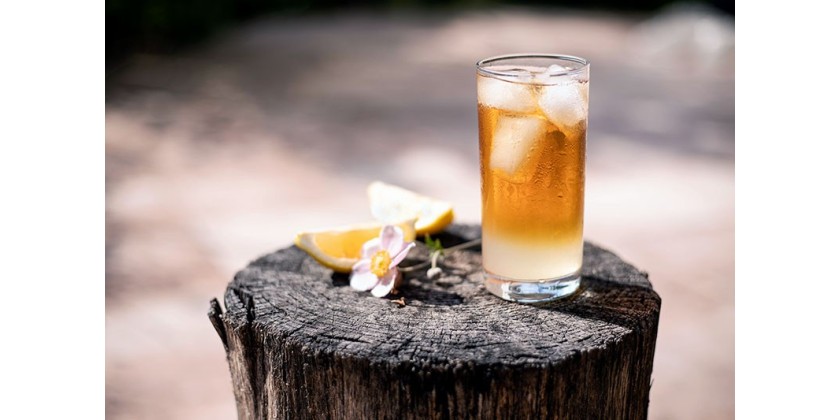
I can remember the first time I had Thai iced tea. I was at a little mom and pop Thai place and was feeling like some tea. I went ahead and ordered a large iced tea figuring it would just be black tea with a bit of sweetener in it. When they brought it out, the first thing I thought was, "This is huge!" because they had served me an Octoberfest stein of tea. (For those unfamiliar with Octoberfest, they have very big mugs.) The second thing I noticed was that the tea had some sort of creme or milk in it because the tea was a light brown instead of the usual black. I decided I was paying for it, so I may as well give it a try, and it was amazing. I have gone back to that Thai place just because I wanted the Thai iced tea.
If you haven't tried Thai iced tea you're in luck. I have a recipe to share, and it's easy to make!
Ingredients
- 6 C Vanilla Creme Earl Grey - black tea
- star anise, ground tamarind, cardamom and/or other spices, to taste (optional)
- 1/2 C sugar
- 1/2 C sweetened condensed milk
- 1 C evaporated milk
Directions:
- Make the tea. While you steep it, you'll want to add any spices you'd like to add.
- While the tea is still hot, stir in sugar until dissolved, then stir in condensed milk.
- Allow tea mixture to cool to room temperature or colder.
- Fill tall iced tea glasses with ice, and pour in tea mixture until glasses are roughly 3/4 full.
- Top off glasses with evaporated milk.
- Enjoy!
Notes:
-Though any black tea will work, I have found using Earl Grey tea to be the best for this recipe. Many kinds of Earl Grey already have spices mixed in. For an extra creamy taste, try the Vanilla Creme Earl Grey tea available here at californiateahouse.com
-Thai iced tea goes well with spicy foods. The milk will help neutralize the spicy oils so you aren't left with a burning feeling after you eat.

In Traditional Chinese medicine, Ginseng is one of the most used herbs. It is sometimes called an adaptogenic herb, meaning that it is claimed to be one of the best herbs for returning the body to perfect balance. it can be used by itself or in a mixture with other medicinal herbs.
Results in the clinical studies seem to vary widely. Some attribute this to there being several different types of ginseng and the various studies don't always use the same quality of the herb. When taken by itself, studies have found that ginseng has some anticarcinogenic and antioxident properties. Other studies have found that it may have anti-inflamatory properties and an effect on general quality of life. One study even showed that ginseng seemed to reduce fatigue in cancer patients. When used in mixtures with other herbs, results seem to be more conclusive (possibly due to a predetermined potency in the preparation.) The mixture called Si Jun Zi Tang, of which ginseng is the major ingredient, has been found by several studies to have a radioprotective property, helping ease the side effects of radiotherapy.
Most commonly found in a dried form, (either whole or sliced) ginseng can be found in teas as well. In my experience, it is usually mixed with a black or green tea to enhance taste. If this herb seems to be of interest to you, I encourage you to research it further and give it a try.

From a Westerner's point of view, Traditional Chinese Medicine (TCM) is old fashioned and perhaps even obsolete. The methods are usually different from Western Medicine and can often seem like they come from fantasy novels. A closer look, however, can show someone with an open mind that some of the practices make a certain amount of sense.
The first thing to understand with TCM is the ways it differs from Western Medicine. The two main ways it differs are in diagnosis of ailments, and treatments. In Western Medicine, doctors often use symptoms as a means to isolate the organ that is causing problems. This approach can be short sighted, in that a medication that fixes a problem in one organ, can cause another organ to have problems. This can result in patients either taking a bunch of medications to fix the side effects of the first medication, or having to decide which symptoms and side effects they can live with. In TCM, symptoms are seen as an imbalance in the body. Medicines are given to return the body to balance. Looking at the body as a whole allows the practitioner to lessen symptoms while creating minimal side effects.
Treatments in TCM are where Westerners start becoming skeptical. Instead of a pills, syrups and injections, TCM focuses on herbal medicines, food cures, and massage. While certain things can be easy to accept (ie, such and such herbal tea contains anti-oxidents, therefore it's good for treating certain symptoms), Westerners usually remain skeptical because of some of the more extreme medicines used in TCM (ie, powdered seahorse, rhino horns, shark fins). This is where my theory regarding TCM comes into play. Do research before trying a TCM treatment and use only the ones you are comfortable with.
I personally drink certain herbal teas because I either know their properties or can believe that their reported properties work. Certain teas are helpful to your body and that can be proven. Food cures can be similar to what a Western nutritionist will tell you. And who is going to argue that a massage isn't good for most people? Take the herbal medicines and food cures that seem right to you and refer to Western Medicine for any symptoms you can't treat with TCM. I will be posting articles on certain teas and herbs that can be used to help keep your body in balance over the next few weeks. I hope you come back to read them and give them a try.

|