
|
| |
Many of the herbal teas offered by California Tea House are grown at small, organic farms in California; these farms also provide many of the berries and flowers found in other teas. Even large chains like Wal-Mart have begun to offer and promote organic products. In my experience, organic products taste the same as coventionally-raised and produced food items, yet cost much more. So, what gives? Why is it important to eat and drink organic, even when it coems to tea?
1. It's important to support small farms. Most organic farms are small farms (source), which means you can feel fairly safe in that your organic dollars are not supporting unethical labor conducted in third-world countries.
2. By choosing organic, you are choosing to protect the health of farm workers. Because organic products are not grown using dangerous pesticides and chemicals, farmers who work on organic farms do not risk their health by coming into extensive, close contact with these toxic substances (source).
3. It's green! Because organic farms do not use as many chemicals as conventional farms, less energy is used applying these chemicals. Many organic farmers use naturally-occurring fertilizers, and because organic food is typically sold closer to where it is grown than conventionally-grown food, less energy is used for transport (source).
4. There is research indicating that organic foods contain more vitamins and minerals than conventionally-raised food (source).
By drinking tea comprised of organic ingredients, you are doing something wonderful for yourself, the earth, and society at large.

Sustainability, describes a lifestyle in which resources are used to their fullest and not depleted or permanently destroyed. Sustainability is a wonderful philosophy as it can be practiced in almost every daily activity and anyone, regardless of age or living situation, can begin to practice it at any point. Whether you drink tea for health, for flavor, to wake up or to fall asleep, you can begin a sustainable practice simply by choosing and using your tea wisely!

Love the earth with loose tea:
Tea is already considered by many to be a sustainable crop since tea leaves used are only cut off of the top of tea plants. Unlike other crops, tea does not have to be harvested from the earth and consistently replanted. Loose tea further supports sustainability long after tea leaves have been cut.
It may seem like an obvious concept, but loose-leaf tea drastically reduces the amount of packaging, resources and environmental impact seen in packaged tea bags at a typical grocery store. Tea bags, even those marked 'biodegradable', can take a very long time to break down once thrown away. In addition, staples are often used to seal the individual bags and larger cardboard boxes package the ten or so bags purchased. Wasted packaging material combined with shipping thousands of cardboard boxes of bag-sealed tea, it turns out tea buyers may be biting off much more than they can chew...or drink.
Loose tea not only requires less packaging material and shipping energy, but often loose teas are more often organically grown, meaning no pesticides or chemicals are used on the tea plants contributing to cleaner air and a healthier environment, not to mention healthier consumers!
Composting with tea leaves:
Creating sustainable habits with tea can extend to after the buying and drinking of loose tea. High in nitrogen, potassium, phosphorus and other minerals, steeped tea leaves are a valuable addition to your compost or alone as mulch. Tea leaves are superb at holding moisture and can be used on soil or exposed areas of your garden to prevent the area from drying out!

Matcha is a type of green tea used mainly in traditional Japanese tea ceremonies; pale green with a nice, if weak smell. I heard the taste is bitter, but strangely plesent. As a lover of all sorts of green tea, I've always wanted to try it, so imagine my joy when I found it at the local grocery store I shop at. Having run out of black tea and dried cranberries earlier in the week, I decided to go shopping earlier than unsual. I could live without black tea by drinking the remaining green tes, but I needed the cranberries.
AS I browsed the tea aisle, I passed the green and flavored teas to look for standard black tea, when I looked up on the top shelf and ta-da! There it was in all its very expensive glory. $30 for tea is far more than any college student could afford, and I still needed my cranberries. I poked around and eventually found a matcha and green tea blend that fit within my budget. I took it home and proceeded to make a cup of tea.
I heated up a cup of water and dropped a circular bag into my mug, the label on the container telling me to let it soak for three or four minutes. When I took the tea bag out, a cloud of green fog hovered in the middle of my cup before settling to the bottom. The rest of it was a pale greenish-brown color like regular green tea.
It tasted like it looked, but as I drank the dregs, the bitter flavor it's touted for hit my taste buds like a wave. After recovering from my initial shock, I found the normal green tea flavor balanced the bitter flavor very well. It reminded me of summer-time and freshly cut grass.
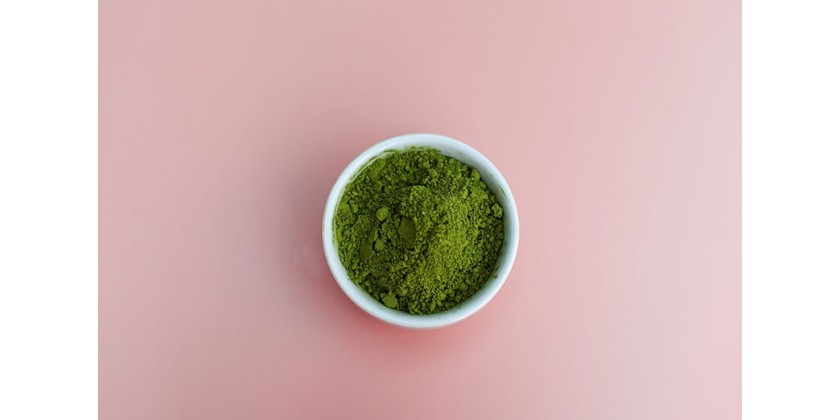
Matcha is merely green tea leaves ground up very finely, providing all the health benefits that regular green tea does.
I would not recommend dropping a tea bag into your cup directly, rather, making a pot of tea and drinking it slowly while relaxing after work. It’s a calming tea, the flavor and smell making it a good drink for the end of a hard day or watching a storm while curled up with a good book.

Imagine a piece of art painted with tea. That's what Dara Gold from Toronto, Canada did and her imagination goes beyond that creating amazing pieces of art.
While sipping a cup of tea and staring at her sketchbook thinking how to make her new method of a mark, it dawned upon Dara to try it using a left over tea bag. For the next week, whenever Dara drank tea, she would use the tea bag to make a stain on her drawings. Once the stain dried, she saw things in them which inspired her to draw. She even stains canvases to start the painting process. Dara generally works with orange pekoe and sometimes utilitizes cranberry or wild berry tea for added blues and pinks. She's learned that red teas dry off blue even though their original stains are vibrant pink and purple hues.
She starts off with a large piece of paper or canvas and stains it without a particular image in mind. After studying it for some time to figure out what the image speaks to her, she inks it with a pen. On canvas, she adds paint and paper and then inks it with a brush or India ink. All the inking on paper and canvas is free-handed.
Dara Gold's combination of memorable characters and scenarios embedded in splats of tea is innovative and unique. Her complete work can be found at www.daragold.ca.

One of our customers wrote Ani to let her know that they save their used loose leaf tea leaves and use them as odor eaters for the refrigerator and shoes. I don't know about putting tea leaves in my shoes, even though I'm sure Ani would love me to, but for the refrigerator is a great idea!
Apparently, it doesn't matter what type of tea, but this individual claims green tea works best. Ani and I tried it with the used leaves of our Golden Monkey Paw and I have to say, it works way better than using baking soda.
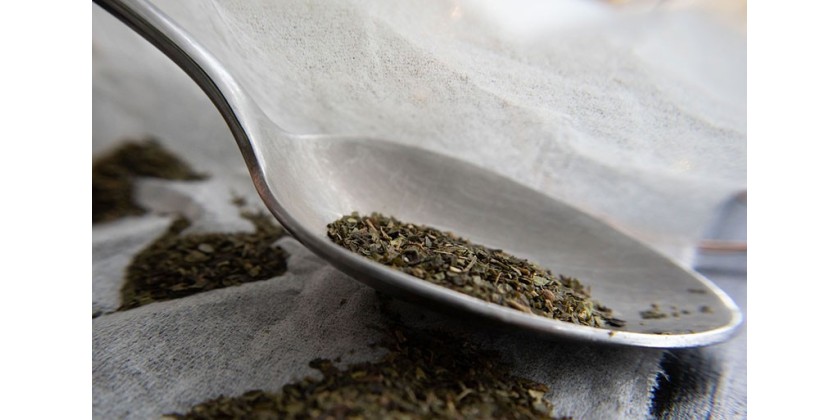
The process is simple: Each time you have a cup of tea, drain the leaves very well, then save the used tea leaves on a paper towel near the window to help them dry faster. Once the tea leaves are nice and dry, put them in a glass jar without the top and put the jar in the back of your refrigerator. About half a cup of dry leaves will really freshen up the refrigerator. The tea pulls away all the different food smells, and helps keep one food's fragrance away from other foods. A light tea fragrance is also very appetizing, not that I need anymore appetite! About the time you have another 1/2 cup of dry, used tea leaves saved up, it's time to change out the natural refrigerator air freshener.
This brings up another good point. The odor absorbing qualities of tea is the main reason why it's very important to keep your unused tea in a air tight, ziplock pouch like the ones we provide with our tea. These pouches keep the tea much fresher then the tins we've tried in the past.

|